Can Knock Knees Be Corrected Surgically? Understanding Knee Deformities in Growing Teens
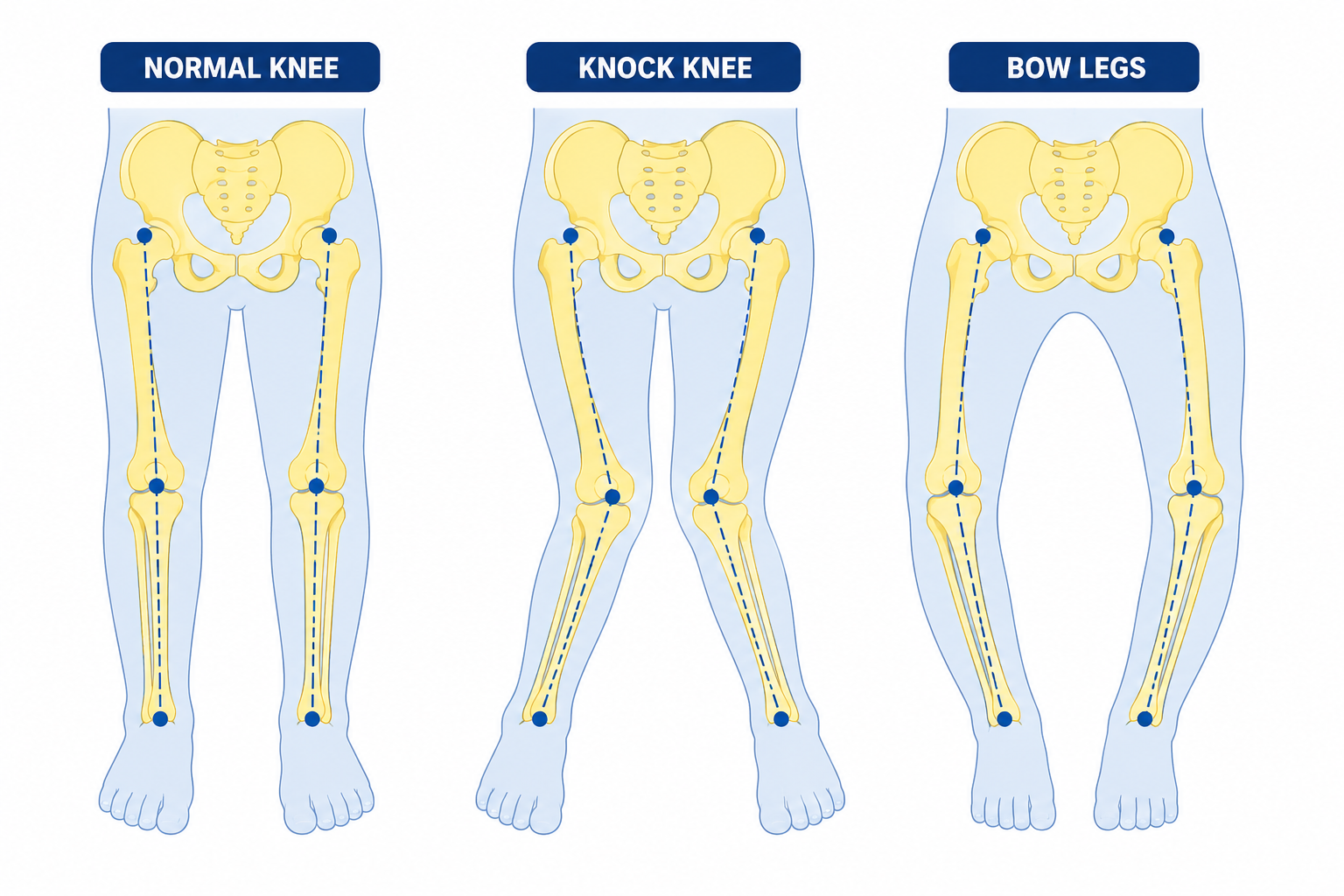
Watching your child grow into their teenage years is exciting, but it can also bring new health concerns. One condition that often becomes more noticeable during this stage is knock knees, medically known as Genu Valgum. Parents may observe that their child's knees touch each other while the ankles remain apart, making walking, running, or participating in sports more difficult. Many families wonder whether knock knees are simply a part of growing up or if they require medical treatment. The good news is that while mild cases often improve naturally during childhood, persistent or severe knock knees in older children and teenagers can be effectively treated, including through surgery when necessary. At Olir Super Speciality Hospital, a trusted Orthopaedic Hospital in Chennai, our experienced orthopaedic specialists evaluate knee deformities in children, teenagers, and adults using advanced diagnostic techniques. We provide personalized treatment plans that focus on restoring proper alignment, improving mobility, and helping patients return to an active lifestyle. In this guide, we'll explain what knock knees are, why they develop, how they are diagnosed, and the latest surgical options available for correcting this condition.
What Are Knock Knees?
Knock knees, or Genu Valgum, is a condition in which the knees angle inward and touch each other while the ankles remain separated when standing. This inward alignment can affect one or both legs. During early childhood, a certain degree of knock knees is considered normal. Between the ages of 2 and 7 years, many children naturally develop mild inward knee alignment as part of their normal growth pattern. As they continue growing, the legs usually straighten without requiring treatment. However, if the condition persists beyond childhood, worsens over time, or causes pain and difficulty walking, it should be evaluated by an orthopaedic specialist.
Are Knock Knees Normal?
This is one of the most common questions parents ask. The answer depends on the child's age. Mild knock knees are generally considered normal in young children and often correct themselves naturally as bones continue to grow. Medical evaluation becomes important when:
- The deformity persists after the normal growth period
- The knees continue bending inward
- Walking or running becomes difficult
- Only one leg is affected
- The child experiences pain or fatigue
- The deformity affects confidence or daily activities
What Causes Knock Knees?
Several factors can contribute to the development of knock knees. Understanding the underlying cause helps determine the most appropriate treatment.
- Normal Growth: Many children naturally develop knock knees between early childhood and school age. In most cases, the condition resolves on its own without intervention.
- Vitamin D Deficiency and Rickets: Prolonged nutritional deficiencies can soften bones, leading to rickets. Weak bones are more likely to bend under body weight, increasing the risk of knock knees or bowed legs.
- Growth Plate Disorders: If one side of a growth plate develops abnormally, it can cause the leg to grow at an uneven angle, resulting in knee deformities.
- Genetics: Some children inherit skeletal characteristics that increase the likelihood of developing leg alignment problems.
- Obesity: Excess body weight places additional stress on growing bones and joints, which may worsen existing knee deformities.
- Previous Bone Injuries: Fractures involving the growth plate can alter the normal growth pattern of the leg, leading to abnormal alignment.
Common Symptoms of Knock Knees
The severity of symptoms varies from person to person. Some children experience only cosmetic concerns, while others have difficulty performing everyday activities. Common symptoms include:
- Knees touching while standing
- Ankles remaining apart
- Difficulty running
- Frequent tripping
- Poor balance
- Knee pain
- Hip discomfort
- Uneven walking pattern
- Fatigue after prolonged walking
- Reduced participation in sports
- Visible inward bending of the legs
How Do Orthopaedic Specialists Diagnose Knock Knees?
Diagnosing knock knees involves more than simply observing the leg alignment. Specialists perform a detailed evaluation to identify the cause and determine the most appropriate treatment. Medical History: age when the deformity was first noticed, growth milestones, family history, previous injuries, nutrition, physical activity, and symptoms during walking or running. Physical Examination: leg alignment, knee position, hip movement, walking pattern, foot posture, limb length, and muscle strength. Standing Alignment Assessment: the child's standing posture is carefully assessed to measure the severity of the deformity and determine how the body's weight passes through the knees. X-rays: standing X-rays allow doctors to evaluate bone alignment, growth plates, joint structure, degree of deformity, and mechanical axis of the lower limb. Growth Plate Evaluation: determining whether the growth plates are still open is one of the most important factors in deciding treatment. Children with significant growth remaining may benefit from guided growth procedures, while those nearing skeletal maturity may require different surgical techniques.
When Is Surgery Required for Knock Knees?
Not every child with knock knees needs surgery. Many mild cases improve naturally as children grow, especially during early childhood. However, when the deformity persists into adolescence, becomes severe, or affects daily activities, surgical correction may be the most effective solution. Surgery may be recommended if:
- Knock knees persist beyond the normal age of correction
- The deformity continues to worsen
- The child experiences pain while walking or running
- Sports and daily activities become difficult
- One leg is more affected than the other
- X-rays show significant bone misalignment
- Conservative treatment has not improved the condition
Early intervention can prevent long-term complications such as abnormal joint wear, knee pain, and early arthritis.
Surgical Treatment Options for Knock Knees
Modern orthopaedic surgery offers highly effective treatment options for correcting knock knees. The choice of procedure depends on whether the child's growth plates are still open and the severity of the deformity.
- Guided Growth Surgery (Stapler Procedure): If the child still has sufficient growth remaining, this minimally invasive procedure places a small plate or implant on one side of the growth plate, temporarily slowing growth on that side while allowing the opposite side to continue growing normally, gradually straightening the leg without cutting the bone. Benefits include a smaller incision, shorter hospital stay, less postoperative pain, and faster recovery.
- Corrective Osteotomy with Plate Fixation: When growth plates are nearly closed or the deformity is more severe, the orthopaedic surgeon carefully cuts the bone and realigns it into its normal position, then stabilizes it using specially designed plates and screws, correcting severe deformities, improving walking and posture, and helping prevent future arthritis.
Recovery After Knock Knee Surgery
Recovery varies depending on the surgical technique and the individual patient's healing process. Most patients can expect a structured rehabilitation program designed to restore strength, flexibility, and normal movement, including a short hospital stay, pain management, early assisted walking, physiotherapy exercises, regular follow-up appointments, periodic X-rays, and a gradual return to school and sports based on the surgeon's advice.
Can Knock Knees Be Prevented?
Not all cases of knock knees can be prevented, especially those related to genetics or developmental conditions. However, parents can support healthy bone development through good nutrition and lifestyle habits, including a balanced diet rich in calcium and Vitamin D, regular outdoor play, maintaining a healthy body weight, regular physical activity, routine pediatric check-ups, and seeking early medical evaluation if abnormal leg alignment is noticed.
Meet Our Orthopaedic Specialists
Dr. F. Fakhruddin, MBBS, MS (Orthopaedics), With over 20 years of experience, Dr. F. Fakhruddin specializes in joint replacement surgery, trauma care, arthroscopy, sports injury management, and complex bone and joint disorders. Dr. Naga Praven, MBBS, D.Ortho, DNB (Orthopaedics), With more than 16 years of experience, Dr. Naga Praven has expertise in pediatric orthopaedics, trauma surgery, spine disorders, sports medicine, joint replacement, and arthroscopy.
Why Choose Olir Super Speciality Hospital?
Families looking for the Best Orthopaedic Hospital in Chennai choose Olir because of our commitment to delivering comprehensive and compassionate orthopaedic care. We offer:
- Experienced orthopaedic surgeons
- Advanced diagnostic imaging
- Personalized treatment plans
- Pediatric orthopaedic evaluation
- Trauma and fracture management
- Joint replacement services
- Sports injury treatment
- Arthroscopy procedures
- Comprehensive rehabilitation support
Conclusion
Knock knees are a common concern among growing children and teenagers. While many cases resolve naturally, persistent or severe deformities should not be ignored. Early assessment by an experienced orthopaedic specialist can help determine whether observation, guided growth surgery, or corrective osteotomy is the most appropriate treatment. At the best hospital in Chennai, our orthopaedic team is dedicated to providing advanced, patient-focused care for children and adults with knee deformities. If your child has persistent knock knees or difficulty walking, fill out our appointment form today to schedule a consultation with our orthopaedic specialists and receive a personalized treatment plan.
Consult Our Specialists

Frequently Asked Questions
Find answers to common questions about our services, treatments, appointments, and patient care options to help you make informed health decisions.
Mild knock knees are common between the ages of 2 and 7 years and often improve naturally as children grow. Persistent or severe cases should be evaluated by an orthopaedic specialist.
Knock knees can result from normal growth patterns, Vitamin D deficiency or rickets, growth plate disorders, genetics, obesity, or previous bone injuries.
Many mild cases improve naturally during childhood without treatment. However, persistent or severe deformities in older children and teens may require guided growth surgery or corrective osteotomy.
Guided growth surgery is a minimally invasive procedure that temporarily slows growth on one side of a growth plate, allowing the leg to gradually straighten as the child continues to grow.
Consult the experienced orthopaedic specialists at Olir Super Speciality Hospital, Velachery, Chennai, for comprehensive evaluation and personalized treatment of knock knees and other knee deformities.
Related Articles

Top 5 Cardiology Treatments at Chennai's Best Super Speciality Hospitals in 2026
Chennai has earned a strong reputation as a medical capital of India, especially in cardiac sciences...

Best Neurology Hospitals in Chennai: Stroke Care and Neurosurgery Guide
Chennai has emerged as one of India’s most trusted destinations for neurological care. A leading neu...
Joint Replacement Surgery: Why Choose Chennai Super Speciality Orthopedics
Chennai has become a top destination for advanced orthopedic care in India. A leading orthopedics ho...
Need Expert Medical Care in Velachery?
Book Your Appointment with Our Specialists Today
Get expert consultation, accurate diagnosis, and the right treatment, all under one roof at OLIR Super Speciality Hospital.
Book Appointment