Hospital in Chennai for OPLL: When Calcium Deposits in the Spine Can Compress the Spinal Cord
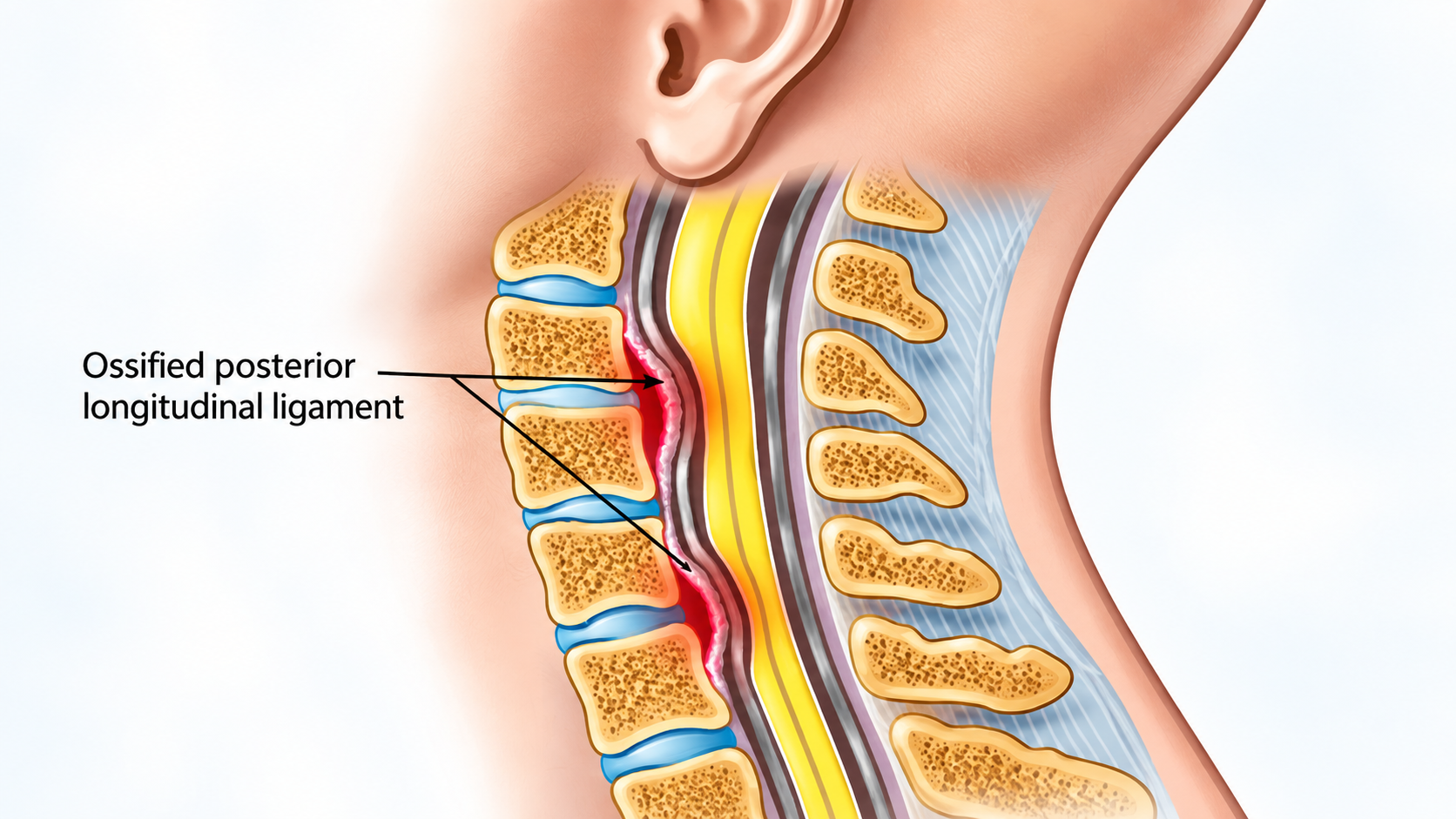
The spine protects the spinal cord, an important part of the nervous system that carries signals between the brain and the rest of the body. Problems that narrow the space around the spinal cord can therefore cause serious neurological symptoms. One such condition is ossification of the posterior longitudinal ligament (OPLL). In OPLL, the posterior longitudinal ligament, which runs along the back of the vertebral bodies inside the spinal canal, gradually becomes abnormally hardened and bone-like. When this thickened ligament occupies space within the spinal canal, it can compress the spinal cord. In severe cases, spinal cord compression can result in weakness, difficulty walking, loss of coordination and, if significant neurological injury occurs, paralysis. For patients searching for a hospital in Chennai for symptoms related to spinal cord compression or cervical spine conditions, early specialist evaluation is important. At Olir Super Speciality Hospital, Velachery, patients with neurological and spine-related symptoms can be evaluated to determine the underlying cause and appropriate treatment.
What Is OPLL?
OPLL stands for Ossification of the Posterior Longitudinal Ligament. The posterior longitudinal ligament is a strong band of tissue that runs along the back of the vertebral bodies inside the spinal canal. Normally, this ligament is soft and flexible. With OPLL, portions of the ligament gradually become ossified, meaning they become hardened and bone-like. As the ossified ligament becomes thicker, it can reduce the available space inside the spinal canal and potentially put pressure on the spinal cord.
Why Can OPLL Be Dangerous?
The spinal cord passes through the spinal canal. When the ossified ligament grows into this space, it can reduce the room available for the spinal cord. This can result in: OPLL → narrowing of the spinal canal → spinal cord compression → neurological symptoms The severity depends on factors such as the location and extent of ossification and how much the spinal cord is compressed. Not everyone with OPLL develops severe symptoms, but significant spinal cord compression requires careful medical assessment.
What Symptoms Can OPLL Cause?
OPLL can produce symptoms that develop gradually. Possible symptoms include:
- Neck pain or stiffness
- Numbness or tingling in the hands
- Weakness in the arms or legs
- Difficulty walking
- Loss of balance
- Poor coordination
- Difficulty with fine hand movements
- Muscle stiffness or spasms
- Difficulty performing everyday activities
Some people may notice that they are dropping objects, having difficulty writing, or becoming unsteady while walking. These symptoms can occur with several cervical spine conditions, so proper examination and imaging are important.
Can OPLL Cause Paralysis?
Severe spinal cord compression from OPLL can cause major neurological impairment, including weakness or paralysis. The risk depends on the severity of spinal cord compression and the patient's neurological condition. The video highlights the possibility of paralysis affecting the body below the neck when severe cervical spinal cord compression is left untreated. In advanced cases of cervical spinal cord injury, breathing can also be affected, potentially requiring ventilatory support. This is why progressive neurological symptoms should not be ignored.
What Are the Warning Signs of Spinal Cord Compression?
Some symptoms should prompt early medical evaluation, particularly when they are progressive. Watch for:
- Increasing weakness in the arms or legs
- Numbness or tingling
- Difficulty walking
- Loss of balance
- Increasing stiffness in the legs
- Difficulty using the hands
- Frequently dropping objects
- Loss of coordination
- New bladder or bowel problems
- Sudden or rapidly worsening neurological symptoms
Progressive weakness or difficulty walking associated with neck symptoms warrants prompt specialist assessment.
How Is OPLL Diagnosed?
Doctors may use imaging studies to determine whether OPLL is present and whether the spinal cord is being compressed. CT Scan CT is particularly useful for showing the ossified ligament and its extent. It can help doctors understand how much of the posterior longitudinal ligament has become bone-like. MRI Scan MRI provides important information about:
- Spinal cord compression
- The condition of the spinal cord
- Soft tissues
- Other causes of narrowing
Doctors may use CT and MRI together because they provide different types of information. A clinical neurological examination is also important when determining the significance of the imaging findings.
Does Everyone With OPLL Need Surgery?
No. Treatment depends on the patient's symptoms, neurological examination, degree of spinal cord compression and imaging findings. Some patients may be monitored or managed without surgery when there is no significant neurological impairment. However, surgery may be considered when there is:
- Progressive neurological weakness
- Significant spinal cord compression
- Difficulty walking
- Loss of hand function
- Cervical myelopathy
- Significant functional impairment
- Other findings suggesting that decompression is appropriate
The decision should be made individually by a spine specialist or neurosurgeon.
When Is OPLL Surgery Considered?
The primary goal of surgery is generally to relieve pressure on the spinal cord and prevent further neurological deterioration. The surgical approach depends on:
- Number of spinal levels affected
- Location and extent of OPLL
- Degree of spinal cord compression
- Spinal alignment
- Overall health
- Previous spine surgery
Cervical spine surgery may involve an approach from the front, back, or a combination depending on the patient's anatomy and condition. The video specifically highlights that when only a limited number of levels are affected, appropriate surgical treatment may help prevent serious neurological complications.
What Happens If OPLL Is Left Untreated?
The course of OPLL varies between individuals. However, significant spinal cord compression can cause progressive neurological problems. Possible consequences include:
- Increasing weakness
- Difficulty walking
- Loss of hand coordination
- Reduced independence
- Severe spinal cord dysfunction
- Paralysis in severe cases
Treatment decisions should therefore be based not only on the presence of OPLL on a scan but also on the patient's symptoms, neurological examination and degree of spinal cord compression.
Can OPLL Cause Low Blood Pressure?
Severe neurological injury can affect multiple body functions, and critically ill patients may experience complications such as low blood pressure. However, low blood pressure is not a typical symptom that should be automatically attributed to OPLL. If a patient with a serious cervical spinal cord condition develops low blood pressure, breathing difficulty or rapidly worsening weakness, urgent medical assessment is required.
Can OPLL Affect Daily Activities?
Yes. When cervical spinal cord compression affects coordination and strength, everyday activities can become difficult. A person may have trouble with:
- Walking
- Climbing stairs
- Writing
- Using a phone
- Buttoning clothes
- Holding objects
- Maintaining balance
These changes may develop gradually, making them easy to overlook initially. If everyday motor skills are progressively deteriorating, a neurological or spine evaluation should be considered.
Why Should Neck Symptoms With Weakness Not Be Ignored?
Simple neck pain is common and often improves with conservative treatment. However, neck symptoms combined with weakness, numbness, balance problems or difficulty walking require greater attention. These symptoms may indicate pressure on the nerve or the spinal cord. The AANS recommends medical evaluation for progressive weakness or numbness involving the arms or legs and for difficulty with balance or walking.
OPLL Treatment at Olir Super Speciality Hospital, Velachery
At Olir Super Speciality Hospital, Velachery, patients with neck pain, neurological symptoms or suspected spinal cord compression can undergo appropriate clinical evaluation and imaging. When OPLL or another cervical spine condition is identified, the treatment plan is based on:
- Symptoms
- Neurological examination
- CT findings
- MRI findings
- Number of affected spinal levels
- Degree of spinal cord compression
- Overall health
For patients searching for a hospital in Chennai for OPLL evaluation, cervical spinal cord compression, or spine surgery, timely specialist assessment can help determine whether observation, conservative management or surgery is appropriate.
Conclusion
OPLL is more than ordinary neck pain. When the posterior longitudinal ligament becomes ossified and compresses the spinal cord, it can cause neurological symptoms ranging from numbness and weakness to difficulty walking and, in severe cases, paralysis. Early recognition of neurological symptoms and appropriate imaging can help doctors assess the severity of spinal cord compression and determine whether treatment or surgery is necessary. If you develop progressive weakness, difficulty walking, loss of hand coordination, numbness or other neurological symptoms along with neck problems, seek medical evaluation promptly at the best hospital in Chennai.
Consult Our Specialists

Dr. T. E. Sathish Kumar
MBBS, MS (General Surgery), MCh (Neurosurgery)
Co-Founder & Senior Neurosurgeon, Olir Super Speciality Hospital
OLIR Super Speciality Hospital, Chennai
Dr. B. Chendilnathan
MBBS, MCh (Neurosurgery), FRCS
Senior Neurosurgeon in Chennai
OLIR Super Speciality Hospital, Chennai
Frequently Asked Questions
Find answers to common questions about our services, treatments, appointments, and patient care options to help you make informed health decisions.
OPLL stands for Ossification of the Posterior Longitudinal Ligament. It is a condition in which the posterior longitudinal ligament of the spine becomes abnormally hardened and bone-like.
OPLL can be serious when the ossified ligament significantly compresses the spinal cord. The severity varies between patients.
Severe spinal cord compression can cause major neurological weakness and, in advanced cases, paralysis.
Symptoms may include neck stiffness, numbness, weakness in the arms or legs, difficulty walking, balance problems, and reduced hand coordination.
CT scans are useful for showing the ossified ligament, while MRI can show spinal cord compression and changes affecting the cord. Doctors may use both depending on the clinical situation.
No. Treatment depends on symptoms, neurological findings, spinal cord compression, and other individual factors.
Surgery may be considered when there is significant spinal cord compression, progressive neurological symptoms, cervical myelopathy or functional deterioration.
OPLL can progress in some patients. The clinical impact varies, so appropriate follow-up is important.
Seek specialist evaluation of neck symptoms accompanied by progressive weakness, numbness, difficulty walking, balance problems or loss of hand coordination.
Olir Super Speciality Hospital, Velachery provides evaluation for neurological and spine-related symptoms, including conditions involving cervical spinal cord compression.
Related Articles

Top 5 Cardiology Treatments at Chennai's Best Super Speciality Hospitals in 2026
Chennai has earned a strong reputation as a medical capital of India, especially in cardiac sciences...

Best Neurology Hospitals in Chennai: Stroke Care and Neurosurgery Guide
Chennai has emerged as one of India’s most trusted destinations for neurological care. A leading neu...

Joint Replacement Surgery: Why Choose Chennai Super Speciality Orthopedics
Chennai has become a top destination for advanced orthopedic care in India. A leading orthopedics ho...
Need Expert Medical Care in Velachery?
Book Your Appointment with Our Specialists Today
Get expert consultation, accurate diagnosis, and the right treatment, all under one roof at OLIR Super Speciality Hospital.
Book Appointment