Hospital in Chennai for Childhood Stroke: Understanding Moyamoya Disease
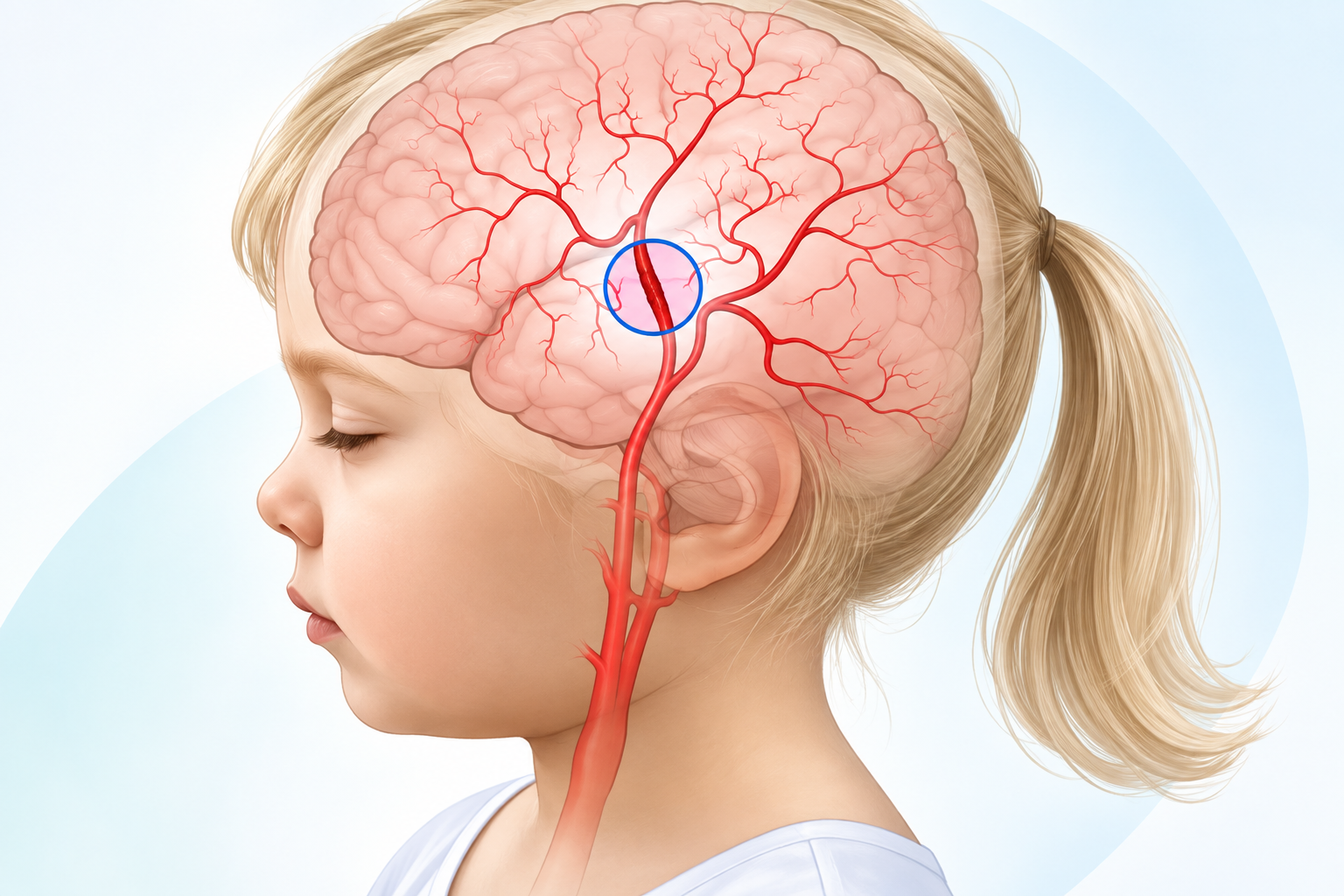
A stroke in a child is an emergency that requires immediate medical attention. Unlike the common risk factors associated with stroke in adults, childhood stroke can sometimes be linked to underlying problems affecting the brain's blood vessels. One such condition is Moyamoya disease, a rare progressive disorder in which important arteries supplying blood to the brain become narrowed or blocked. For families searching for a hospital in Chennai for evaluation of recurrent stroke or unexplained neurological symptoms in a child, understanding the possible underlying causes is important. At Olir Super Speciality Hospital, Velachery, children with neurological symptoms can be evaluated to identify potential causes and determine appropriate treatment.
Can Children Have a Stroke?
Yes. Although stroke is more commonly associated with older adults, children can also experience strokes. A childhood stroke can occur when blood supply to part of the brain is interrupted or when bleeding occurs within the brain. Depending on the affected area, a child may develop:
- Sudden weakness
- Facial weakness
- Difficulty speaking
- Seizures
- Problems with movement
- Difficulty maintaining balance
- Changes in vision
- Other sudden neurological symptoms
Because children may not always be able to clearly describe what they are experiencing, sudden changes in behaviour, movement, or speech should be taken seriously.
Why Can a Child Have Repeated Stroke-Like Episodes?
When neurological symptoms repeatedly occur, doctors may investigate whether an underlying condition is affecting the brain's blood circulation. One possible cause is Moyamoya disease. In this condition, major blood vessels supplying the brain gradually become narrowed or blocked. The brain attempts to compensate by developing smaller blood vessels around the affected areas. However, these alternative vessels may not provide sufficient blood flow, increasing the risk of repeated neurological episodes.
What Is Moyamoya Disease?
Moyamoya disease is a progressive disorder affecting the blood vessels of the brain. The major arteries at the base of the brain become progressively narrowed. As blood flow decreases, a network of small collateral blood vessels can develop. These vessels can produce a characteristic appearance on cerebral angiography that resembles a cloud or puff of smoke, which is where the name "Moyamoya" comes from. The condition can occur in children as well as adults.
What Symptoms Can Moyamoya Cause in Children?
The symptoms depend on the areas of the brain affected by reduced blood flow. Possible symptoms include: Sudden Weakness A child may suddenly develop weakness or numbness, particularly affecting one side of the body. Speech Problems The child may have difficulty speaking or understanding language. Seizures Some children with Moyamoya can experience seizures. Headaches Headaches may occur in some children, although headaches alone do not mean that a child has Moyamoya disease. Recurrent Neurological Episodes A child may experience repeated episodes of weakness, speech difficulty, or other neurological symptoms. These symptoms require medical evaluation rather than being assumed to be temporary or harmless.
Why Is Recurrent Stroke in a Child Important?
A single neurological event may have several possible causes. However, recurrent stroke or repeated stroke-like symptoms in a child require investigation for an underlying condition. Doctors may evaluate:
- Brain structure
- Brain blood flow
- Blood vessels
- Blood-clotting factors
- Other neurological or vascular conditions
Moyamoya disease is one of the conditions that may be considered when the clinical findings are appropriate.
How Is Moyamoya Detected?
Doctors may use specialised imaging to examine both the brain and its blood vessels. Depending on the clinical situation, investigations can include: MRI Brain MRI can identify areas of brain injury and provide information about the effects of reduced blood flow. CT-Based Imaging CT and CT angiography may be used in appropriate emergency or diagnostic situations. Cerebral Angiography Cerebral angiography provides detailed information about the arteries supplying the brain. It can help doctors understand:
- Which arteries are narrowed
- The severity of narrowing
- Alternative blood-vessel networks
- Blood-flow patterns
The choice of investigation depends on the child's symptoms and clinical assessment.
How Is Moyamoya Treated?
Treatment focuses on improving blood supply to the brain and reducing the risk of future neurological injury. In appropriately selected children, revascularisation surgery may be considered. The aim is to establish or improve alternative pathways for blood to reach areas of the brain that are receiving inadequate circulation. The surgical approach can vary depending on:
- The child's age
- Blood-vessel anatomy
- Severity of disease
- Brain blood flow
- Previous neurological events
A specialist evaluation is therefore important before deciding on treatment.
Why Is Early Evaluation Important?
Moyamoya can be progressive. If blood flow to the brain remains inadequate, a child may be at risk of additional strokes or neurological injury. Early evaluation can help doctors:
- Identify the underlying vascular problem.
- Assess the brain and its blood supply.
- Determine the severity of the condition.
- Consider appropriate treatment.
- Plan ongoing follow-up and rehabilitation when necessary.
The earlier a serious vascular condition is recognised, the sooner an appropriate treatment strategy can be considered.
What Happens After a Child Has a Stroke?
Treatment does not necessarily end after the emergency phase. Depending on the child's symptoms, recovery may involve rehabilitation such as:
- Physiotherapy
- Occupational therapy
- Speech and language therapy
- Developmental support
- Neurological follow-up
The rehabilitation plan depends on the part of the brain affected and the child's individual recovery.
When Should Parents Take a Child to the Emergency Department?
Parents should seek immediate medical attention if a child suddenly develops:
- Facial drooping
- Weakness or numbness
- Difficulty speaking
- Difficulty understanding speech
- Sudden vision changes
- Seizures
- Severe coordination problems
- Sudden difficulty walking
- A significant unexplained change in neurological function
Do not wait for symptoms to disappear on their own. Even if symptoms improve after a short period, urgent evaluation may still be necessary.
Choosing a Hospital in Chennai for Childhood Stroke
When a child develops sudden neurological symptoms, the priority should be rapid medical assessment and access to appropriate diagnostic facilities. A suitable hospital in Chennai for suspected childhood stroke should be able to evaluate the neurological emergency and investigate possible underlying causes when required. For recurrent or unexplained neurological episodes, specialist assessment may be necessary to determine whether a condition such as Moyamoya disease is contributing to the problem.
Childhood Stroke Evaluation at Olir Super Speciality Hospital, Velachery
Olir Super Speciality Hospital, Velachery, provides medical evaluation for patients presenting neurological symptoms. When a child presents suspected stroke or recurrent neurological episodes, appropriate clinical assessment and investigations can help doctors understand the possible cause. For families looking for a hospital in Chennai for neurological evaluation, stroke assessment, or specialist care in Velachery, early medical attention is particularly important when symptoms appear suddenly. The treatment plan is determined according to the child's condition, investigation results, and specialist assessment.
Conclusion
Childhood stroke requires urgent medical evaluation. When a child experiences recurrent strokes or repeated neurological symptoms, doctors may need to investigate the brain's blood vessels for underlying conditions such as Moyamoya disease. Recognising the warning signs and obtaining timely specialist evaluation can be important in preventing further neurological injury. If your child develops sudden weakness, facial drooping, speech difficulty, seizures, or another sudden neurological change, seek emergency medical attention immediately at the best hospital in Chennai.
Consult Our Specialists
Dr. B. Chendilnathan
MBBS, MCh (Neurosurgery), FRCS
Senior Neurosurgeon in Chennai
OLIR Super Speciality Hospital, Chennai

Dr. T. E. Sathish Kumar
MBBS, MS (General Surgery), MCh (Neurosurgery)
Co-Founder & Senior Neurosurgeon, Olir Super Speciality Hospital
OLIR Super Speciality Hospital, Chennai
Frequently Asked Questions
Find answers to common questions about our services, treatments, appointments, and patient care options to help you make informed health decisions.
Yes. Children can experience strokes, although the causes and risk factors can differ from those commonly seen in adults.
Repeated neurological episodes may indicate an underlying condition affecting the brain or its blood supply. Further investigation may therefore be necessary.
Moyamoya disease is a progressive condition in which major arteries supplying the brain become narrowed or blocked. The body develops smaller collateral blood vessels to compensate for reduced circulation.
Yes. Reduced blood flow associated with Moyamoya can cause ischemic strokes or temporary stroke-like neurological episodes.
Doctors may use MRI, CT angiography, cerebral angiography, and other investigations to evaluate the brain and its blood vessels.
Yes. In appropriately selected patients, revascularisation surgery may be used to improve blood flow to the brain and reduce the risk of future strokes.
Seek emergency medical care immediately. Sudden weakness, facial drooping, speech difficulty, seizures, or other acute neurological symptoms should not be ignored.
Olir Super Speciality Hospital, Velachery, can provide medical evaluation for neurological symptoms and suspected stroke, with further investigations and specialist management based on the child's condition.
Related Articles
Top 5 Cardiology Treatments at Chennai's Best Super Speciality Hospitals in 2026
Chennai has earned a strong reputation as a medical capital of India, especially in cardiac sciences...
Best Neurology Hospitals in Chennai: Stroke Care and Neurosurgery Guide
Chennai has emerged as one of India’s most trusted destinations for neurological care. A leading neu...
Joint Replacement Surgery: Why Choose Chennai Super Speciality Orthopedics
Chennai has become a top destination for advanced orthopedic care in India. A leading orthopedics ho...
Need Expert Medical Care in Velachery?
Book Your Appointment with Our Specialists Today
Get expert consultation, accurate diagnosis, and the right treatment, all under one roof at OLIR Super Speciality Hospital.
Book Appointment